

College Coursework: Development of an In-Flight Entertainment System
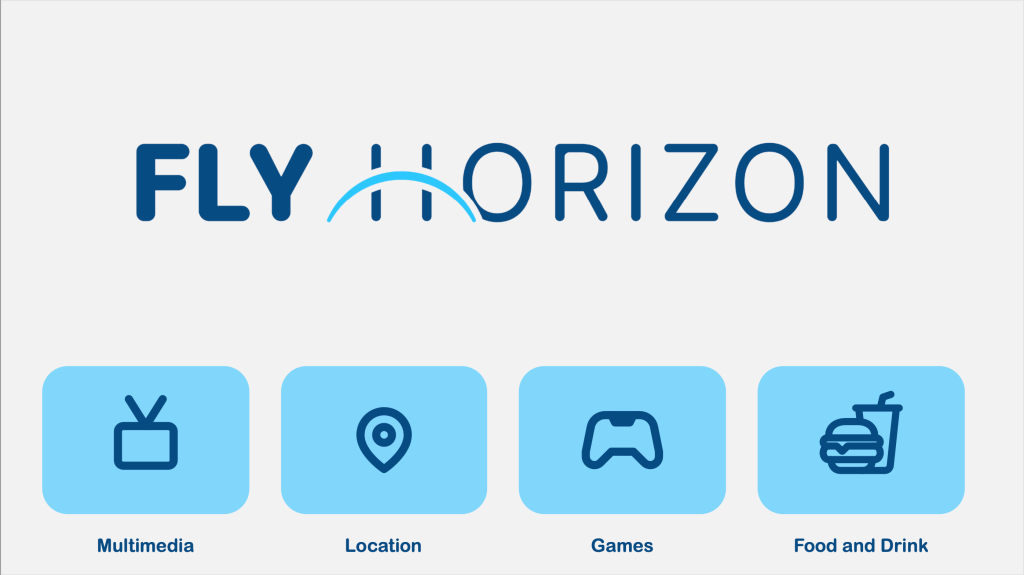
As part of a school project, I designed an intuitive and immersive in-flight entertainment system for Fly Horizon, a leading international airline committed to enhancing the passenger experience. The goal was to create a user-friendly, accessible, and engaging system that sets the airline apart in a competitive industry.
Project Objectives
Fly Horizon aimed to develop an in-flight entertainment system that:
- Provides a seamless, intuitive touchscreen experience with minimal strain on the user.
- Offers a diverse range of entertainment options to engage passengers throughout their journey.
- Ensures accessibility for individuals with visual, hearing, or mobility impairments.
Research & Planning
I started by researching existing in-flight entertainment systems, identifying common pain points such as:
- complex navigation
- slow responsiveness
- … and lack of accessibility options.
Using this research, I developed user personas representing different passenger needs, including business travelers, families, and passengers with disabilities.
Wireframing & Prototyping
I created low-fidelity wireframes to map out the structure of the system, focusing on:
- Simple navigation with clear categories (Movies, TV Shows, Music, Games, Flight Info, and a Food Menu Ordering system).
- Large, easily tappable buttons for ease of use.
Once the wireframes were refined, I moved to high-fidelity prototypes in AdobeXD.
User Testing & Iteration
I conducted usability testing and gathered feedback on:
- Responsiveness of touch interactions (ensuring minimal hand strain).
- Ease of finding entertainment options within three taps.
- Effectiveness of accessibility features for inclusive design.
Refinements included larger touch targets, responsive features to media options, and an intuitive navigation structure to optimize the user experience.
Final Outcome
The final prototype delivered a sleek, modern, and accessible entertainment system that enhances passenger engagement and comfort. This project challenged me to balance functionality, aesthetics, and inclusivity, reinforcing my skills in UX/UI design, user research, and accessibility best practices.

Key Takeaways
Designing for accessibility improves the experience for all users. Efficient navigation enhances user satisfaction. User testing is essential for refining interactions and optimizing usability.
 jaipowell.com